




There's a moment in every faith journey when everything you thought you knew about God gets tested.
Not your knowledge of theology. Not your ability to quote Scripture. But your actual, lived trust in who God is.
Abraham knew that moment. And Genesis 22 is his story — but it's also ours.
The Long Wait
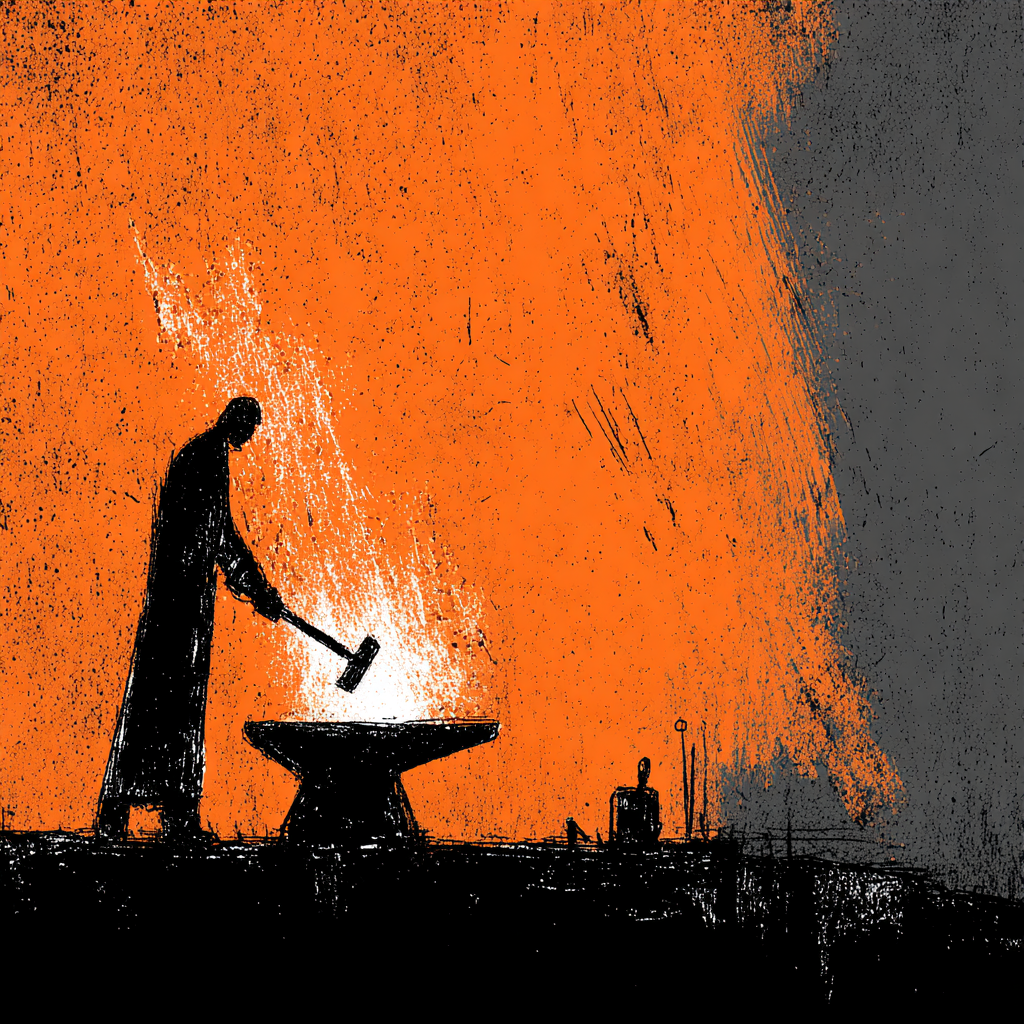
Abraham waited 25 years for a son.
Not 25 days. Not 25 months. Twenty-five years.
When you wait that long for something, you don't wait passively. You fail. You doubt. You try to help God along. You make mistakes that fracture your own household.
Abraham lied to protect himself. Twice. He slept with Hagar because Sarai convinced him God needed help. For a quarter century, Abraham looked like a man who couldn't quite trust the God who had called him.
Yet the promise held anyway.
Not because Abraham was faithful every moment. But because God was faithful every moment.
And finally — at age one hundred — Abraham held Isaac in his arms.
Isaac was not just a son. Isaac was vindication. Isaac was proof. Isaac was the physical embodiment of God's faithfulness. Every time Abraham looked at that child, he was looking at grace made flesh.
Isaac was everything.
The Test
Then God speaks again: "Take your son, your only son, whom you love — Isaac — and sacrifice him as a burnt offering."
Three descriptions. Not one. Three.
Your son. Your only son. Whom you love.
God is not being careless here. He is being precise. He knows exactly what He's asking for. He knows what Isaac cost. He knows that this child represents 25 years of prayer, failure, and finally — grace.
And He asks Abraham to give him back.
Nissah — The Nature of the Test
The text tells us upfront: "After these things God tested Abraham."
The Hebrew word is nissah.
Most of us think testing means being trapped. Being tricked. Being set up to fail. But nissah doesn't mean that. To prove the quality of — that's what it means.
When a jeweler tests gold, he's not trying to ruin it. He's trying to reveal what it's made of. The fire doesn't change the gold — it shows you whether it was ever really gold to begin with.
Genesis 22 is not asking: Will God go through with this?
Genesis 22 is asking: What is inside Abraham? What does a lifetime of walking with God actually produce in a man?
And here's the thing — this happens to us too.
Most of us know what it feels like to have something we love suddenly feel threatened. A relationship. A career. A dream. A version of your future you've quietly made non-negotiable.
And then something shifts. A diagnosis. A door that closes. A silence where you expected an answer.
That's nissah.
Not God being cruel. God surfacing what is true.
The test doesn't create your faith. It reveals whether what you've been calling faith has ever truly been asked to cost you anything.
Obedience Without Understanding
Verse 3: "Abraham rose early the next morning, saddled his donkey and went."
No argument. No negotiation. No recorded prayer of anguish.
Walter Brueggemann, the great biblical theologian, says Genesis 22 shows us obedience that trusts the One who commands — not obedience that understands the command.
Abraham does not know why. He does not see how. He simply knows Who.
And as we walk with Jesus, there will be moments and seasons where faith becomes that simple. And that costly.
Where Is the Lamb?
Three days. That's how long the journey took.
Three days of walking with your son. Three days of watching him run ahead on the path. Three days of his voice asking questions.
What did Abraham think about for three days? The text doesn't tell us. And maybe that's intentional — because you're supposed to put yourself there. Walking toward the thing you cannot explain. With no map. No answer. No voice from heaven.
Just — keep walking.
Then Isaac turns to his father and asks: "Father? The fire and wood are here... but where is the lamb?"
Every person who has ever come to God empty-handed has asked this question.
Where is the lamb? Where is what I need? Where is what I cannot provide for myself?
And Abraham answers: "God himself will provide the lamb, my son."
The God Who Sees
The word provide is the Hebrew yireh.
But yireh doesn't primarily mean to supply or deliver goods. It comes from the root word ra'ah — which means to see.
In Hebrew thought, to see something is to take responsibility for it.
So when Abraham says "God will provide," he's saying something deeper than "God will drop a solution from the sky."
He's saying: God sees. God sees the son. God sees the altar. God sees the knife. God sees the place where obedience has reached its breaking point. And what God sees — God sees to.
This is why Abraham names the place Yahweh Yireh — The LORD who sees, and sees to it.
Not just a God who delivers goods. A God who is watching. Who sees what we cannot see. And moves toward what He sees.
Did Abraham Really Believe?
Did Abraham fully believe what he said to Isaac?
Was this mature faith? Or was this a father buying himself one more mile of road before he had to tell his son the truth?
The text doesn't tell us. And maybe that's the point.
Most of us know what it feels like to say faithful things while our hearts are still trembling.
God is good. He will provide. He is still faithful.
We say it — not always because we feel certain, but because we are trying to hold on.
And God is not offended by trembling faith.
This passage shows us He honors the faith that keeps walking toward Him even while the heart is breaking and shaking.
The Gospel: The Lamb Who Did Not Return
Genesis 22 is not showing you a God who delights in taking from His children. It is showing you a God who provides for His children.
But here's where the story takes a turn that breaks your heart open.
At the baptism of Jesus, the Father speaks: "This is my Son, whom I love; with Him I am well pleased."
Your Son. Your only Son. The Son whom you love.
God has done this before.
Except this time — there is no voice saying stop.
No angel interrupts. No ram appears in the thicket. No substitute is given for Him — because He is the substitute.
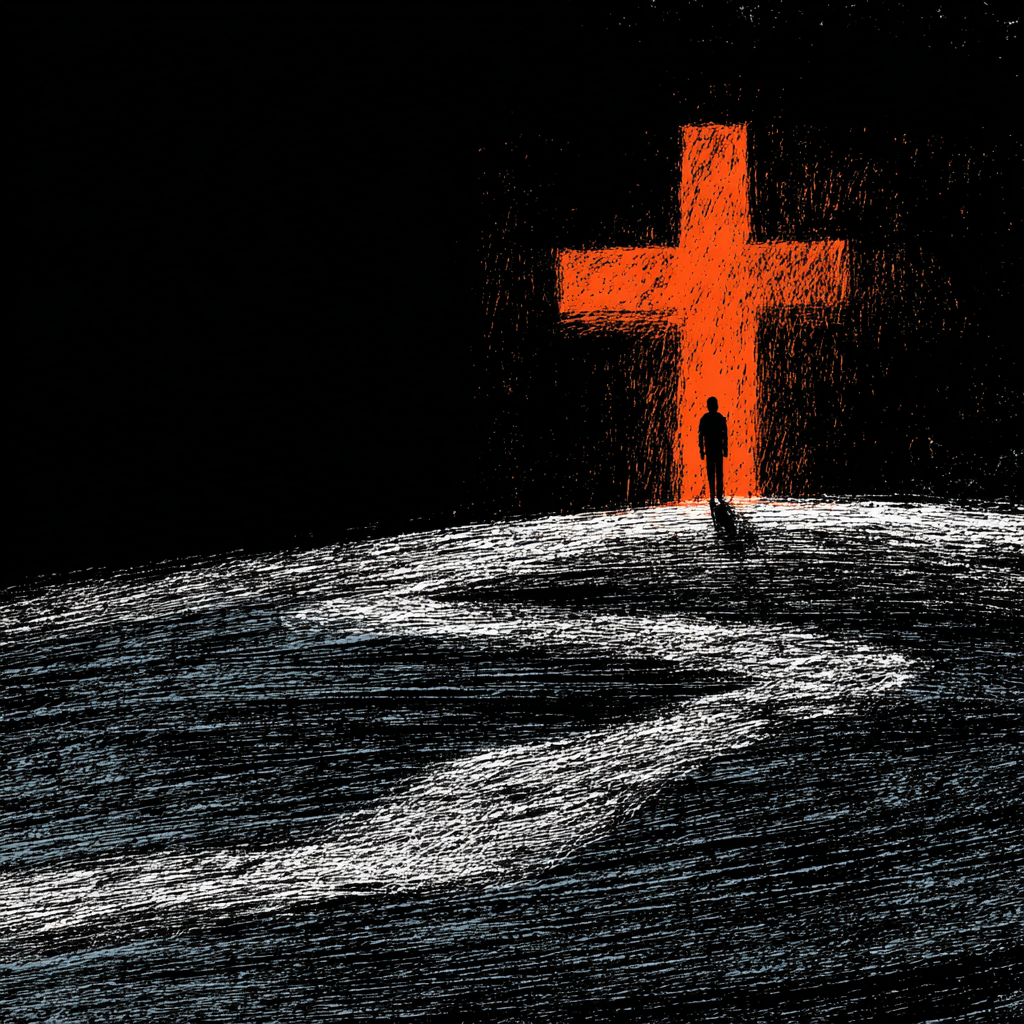
Isaac carried the wood up the mountain. Jesus carried the cross up the hill.
Isaac was bound upon the altar. Jesus was nailed upon the cross.
The ram was caught by its head in a thicket of thorns. Jesus wore a crown of thorns upon His head.
And the question Isaac asked — "Where is the lamb?" — finds its answer in Jesus Christ.
Behold — the Lamb of God who takes away the sin of the world.
At Calvary, the Father gave His Son. His only Son. The Son whom He loved. And Jesus went all the way — all the way into betrayal, into suffering, to the cross.
Why?
So that you could walk down the mountain free. So that sin would not have the final word over you. So that shame and death would not define you.
For Those Carrying Something Heavy
If you came here today carrying something heavy — something you are not sure God sees — hear the gospel:
He sees.
He sees the thing you are afraid to release. He sees the grief you cannot explain. He sees the altar you are standing before.
And He is not asking you to trust a blank sky.
He is asking you to trust the God who has already provided the Lamb.
The God who did not spare His own Son will not abandon you on the mountain.
The Invitation
Maybe you're holding something too tightly. A version of your future. A relationship. A calling. A security you think you cannot live without.
And maybe — like Abraham — God is inviting you to place it back into His hands.
Not because it doesn't matter. It matters. That's why the text emphasizes Isaac's worth. That's why God says your son, your only son, whom you love.
But the invitation is to realize that no gift can bear the weight of being your foundation. Only God can.
And when you place what you love most into the hands of the God who loves most — you don't lose it. You finally get to keep it freely, without the weight of having to control it.
That's what Abraham learned on the mountain. That's what the gospel offers you.
The Father who asked Abraham to go up the mountain is the Father who did not hold back His own Son.
If He could spare Isaac, surely He sees you.
If He provided a lamb for Abraham, surely He has provided what you need to trust Him through your own unmapped road.
The Lamb has been provided.
And He rose on the third day.
So that you could too.